

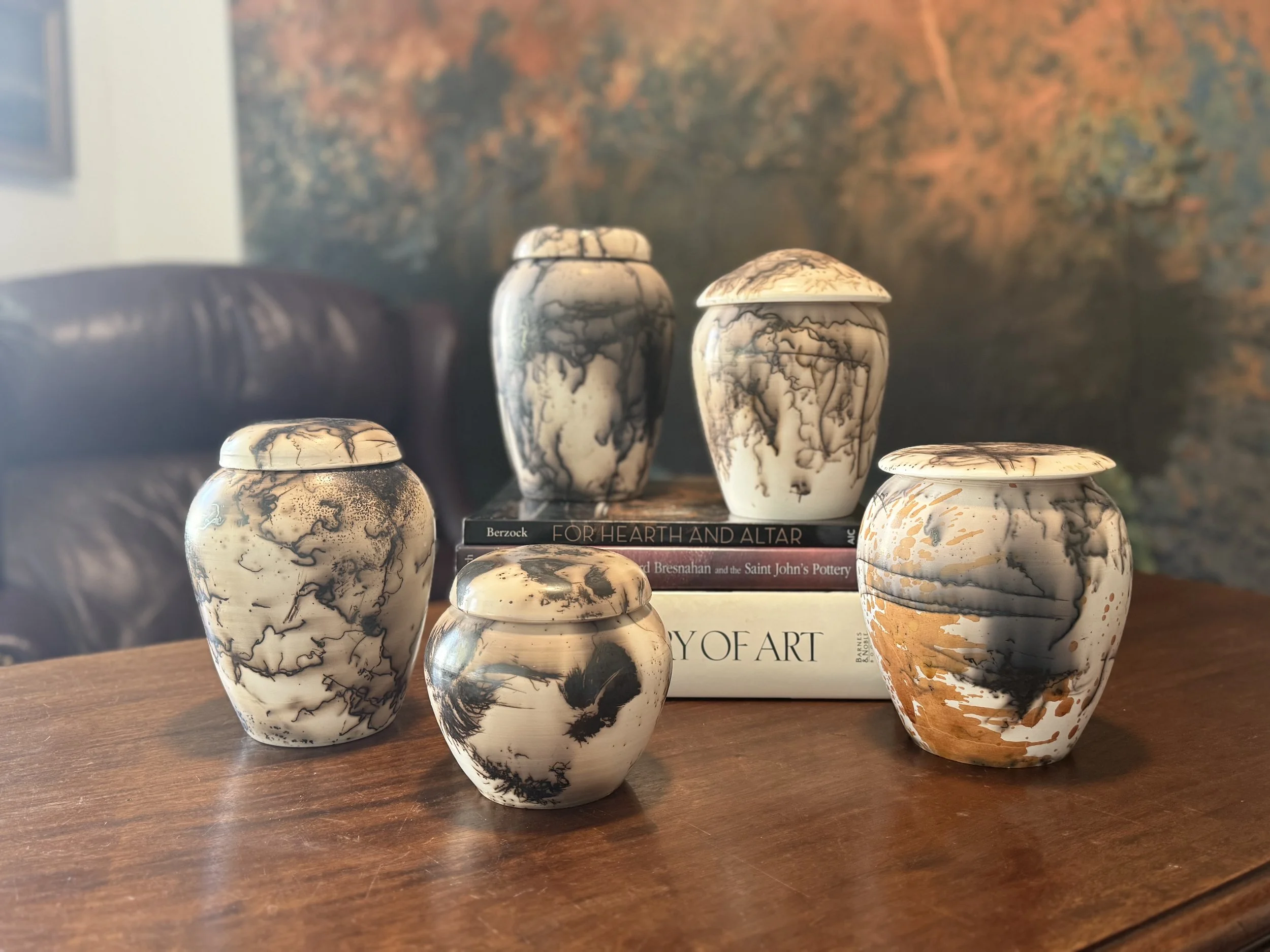
vessel Series
The History of Death Art & Memorial Vessels
Handcrafted vessels created to celebrate life, preserve & HONOR memories
Humans have honored their dead through art since the earliest civilizations. Ancient funerary urns and ceremonial pottery have been found across cultures from Greece, Japan, China, and Indigenous North America to Africa and South America. These vessels often carried ashes, offerings, sacred herbs, or symbols intended to accompany the deceased and comfort the living.
Raku itself originated in 16th-century Japan and became associated with the tea ceremony — a practice rooted in presence, impermanence, simplicity, and reverence for the fleeting nature of life. Horsehair raku, while a more contemporary adaptation, carries many of those same qualities. The smoke markings created in the fire cannot be controlled entirely; they emerge organically, like memory itself.
Modern memorial art continues this ancient lineage. Today, artists and families increasingly seek more personal, handmade alternatives to mass-produced urns — objects that feel intimate, organic, and spiritually meaningful. Memorial pottery becomes not only a resting place, but a continuing relationship: a visible expression of love, grief, beauty, and remembrance.
In this way, death art is not about death alone.
It is about connection.
Continuity.
Presence.
And the enduring imprint of a life once lived.
What Is Commemorative Art?
Commemorative art is created to honor and remember a person, moment, or community. It serves as a meaningful tribute—something that keeps stories, memories, and legacies alive through artistic expression.
Key Elements of Commemorative Art
Purpose
Remembrance and Tribute: These pieces are made to celebrate a life, mark an event, or hold space for memory.
Shared Meaning: They often become part of a collective story, helping families or communities remember together.
Symbolism: Meaning emerges through shape, texture, and the use of organic materials—such as horsehair or a loved one’s hair, along with feathers, leaves, and sugar—which leave natural carbon markings unique to each piece.
A Tradition Through Time
Ancient Roots
From early civilizations, commemorative art has helped people honor loved ones and preserve meaningful lives and events. In ancient Egypt, for example, carefully crafted objects and carvings were created to remember individuals and reflect spiritual beliefs about memory, legacy, and the journey beyond life.
Contemporary Expression
Today, commemorative art appears in many forms—from public memorials to personal keepsakes. These works often reflect modern values, telling stories of identity, resilience, and connection.
Commemorative art continues to be a powerful way to preserve memory and create lasting meaning—something especially personal when shaped by hand and intention.
Dimensions: 4.25”H x 5.5”D
The commemorative piece shown above uses human hair applied to an open-form jar and is finished with ferric chloride, which gives it its distinctive coloration—creating a one-of-a-kind Raku piece.
The above piece is a part of a private collection and not for sale.
Memorial Horsehair Raku
Art as Remembrance
There are moments in life when ordinary objects no longer feel sufficient for holding memory.
A beloved partner.
A parent.
A child.
Throughout human history, people have created sacred objects to honor those they love and grieve. Memorial pottery, funerary vessels, keepsakes, urns, and ritual objects have existed across cultures for thousands of years — not simply as containers, but as acts of devotion. What some now call death art is, at its heart, the deeply human desire to give grief a tangible form.
Our horsehair raku memorial pieces are created in that spirit.
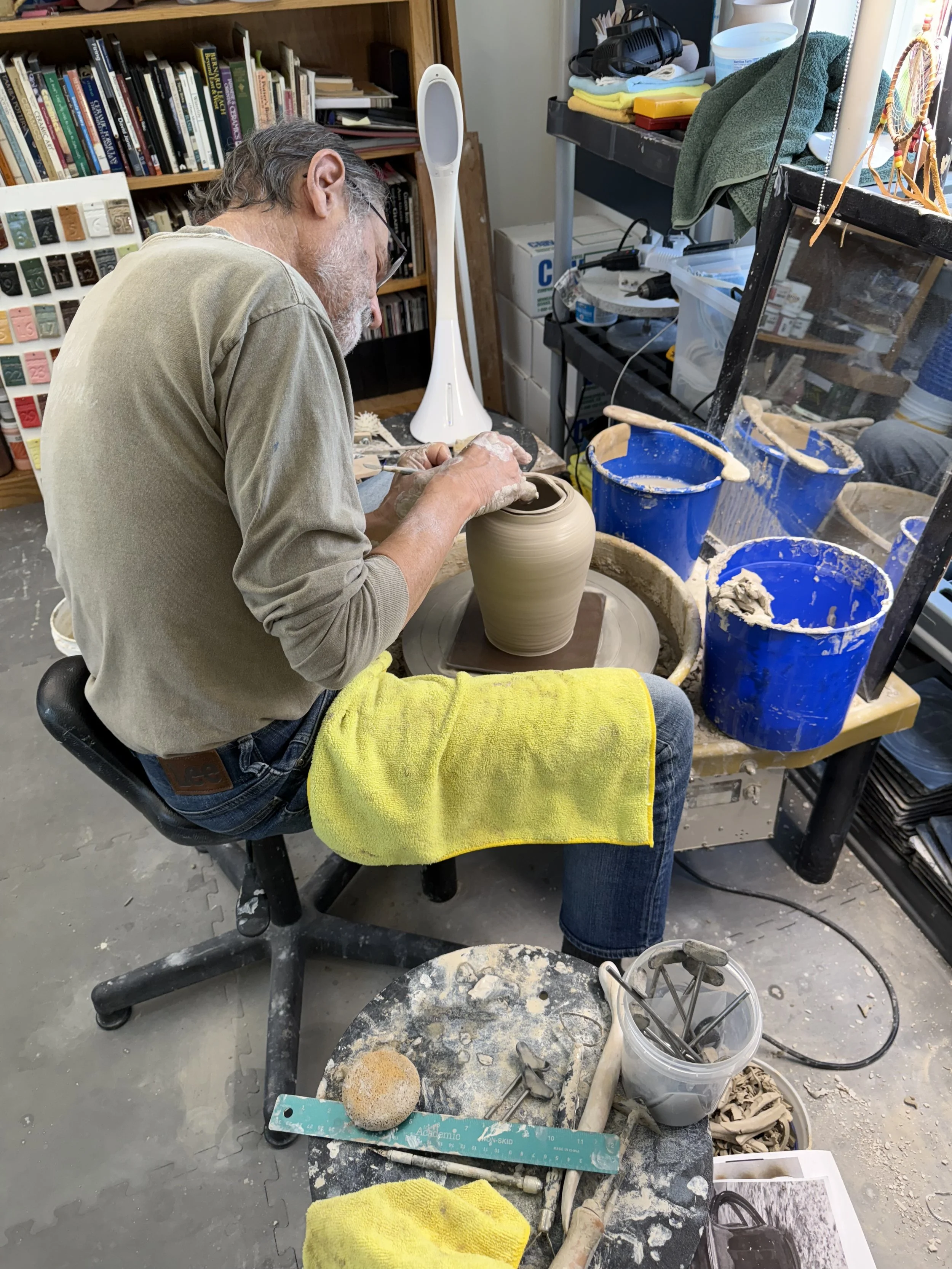
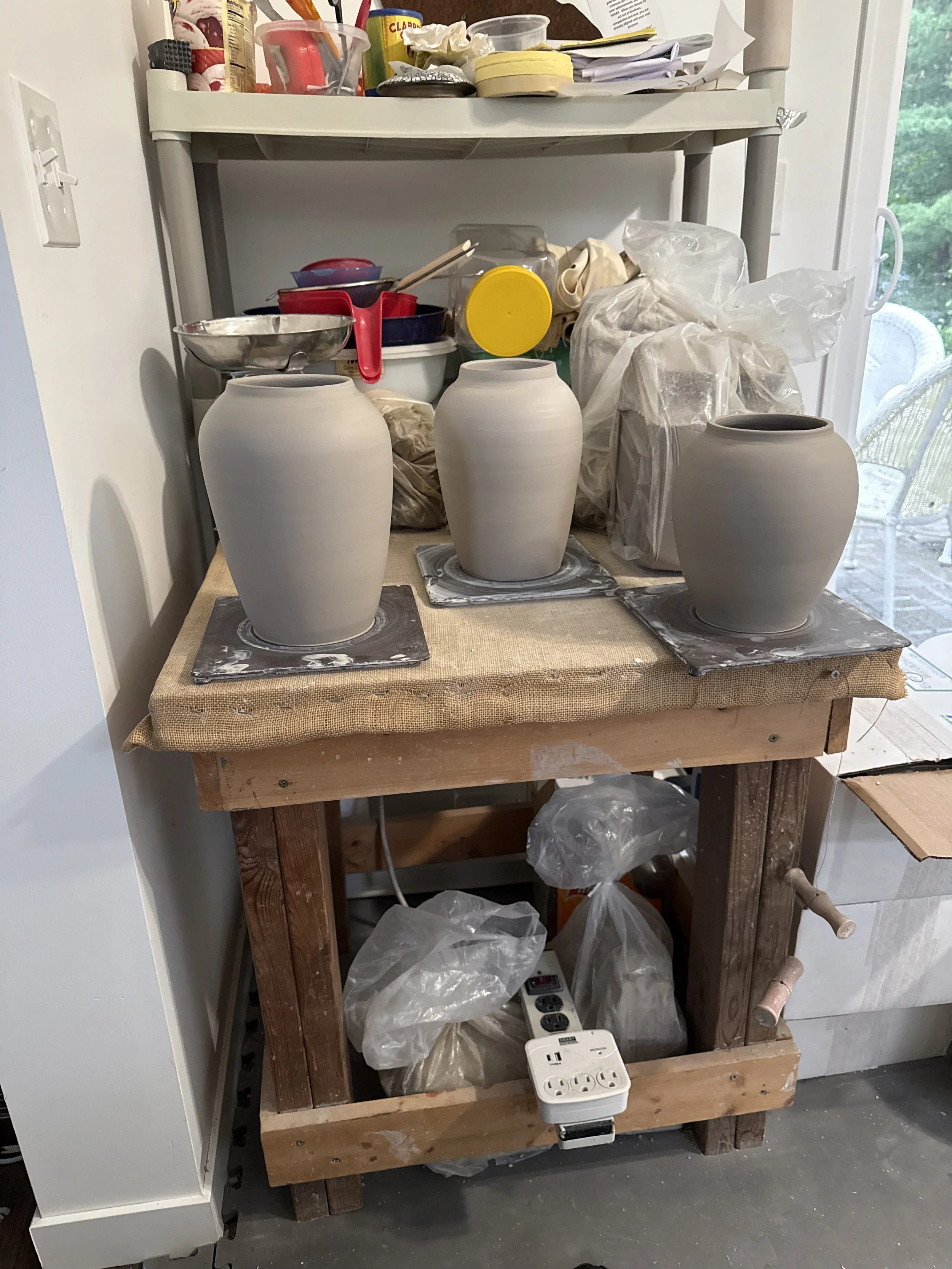
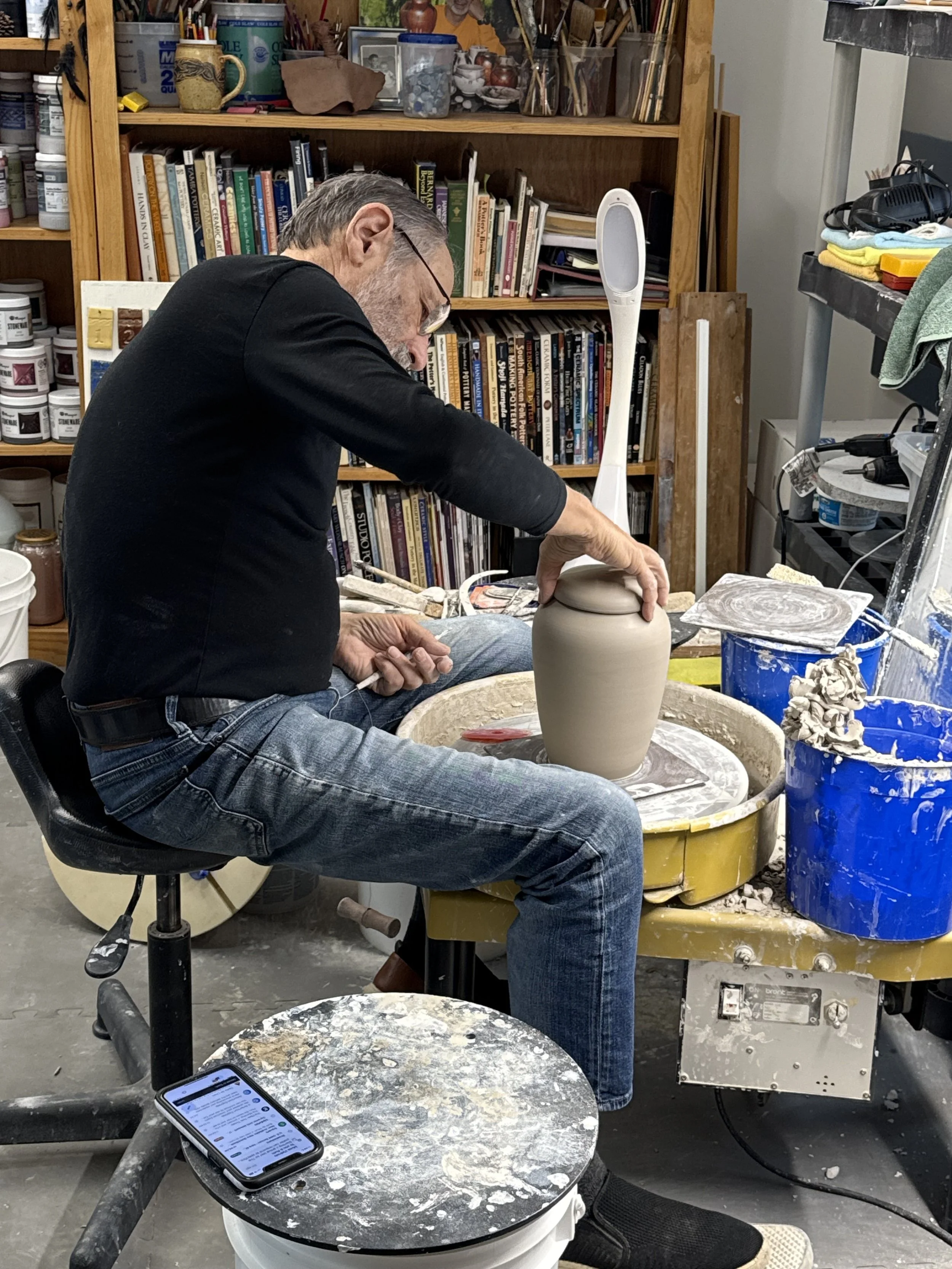
Each vessel is individually wheel-thrown and fired using the raku process. During firing, horsehair and other natural materials are applied to the surface of the clay at nearly 1,200 degrees Fahrenheit, leaving permanent carbon tracings — delicate lines and smoke-like markings that can never be exactly repeated.
For commissioned memorial pieces, a small amount of hair from a loved one or beloved animal companion may be incorporated into the firing alongside horsehair, feathers, leaves, grasses, flowers, sugar, or pine needles. The resulting marks become part of the vessel itself: fleeting matter transformed through fire into lasting remembrance.
No two pieces are ever alike.
The process is unpredictable, elemental, and deeply symbolic — earth, fire, smoke, air, and memory meeting in a single form. Many clients describe these vessels not only as urns, but as sacred objects of presence: something to touch, display, hold, and live beside.
These pieces may serve as:
Memorial urns
Keepsake vessels
Celebration-of-life vessel
Legacy gifts for family members
Ritual or contemplative art pieces
Each commission is approached with care, reverence, and respect for the story entrusted to us.
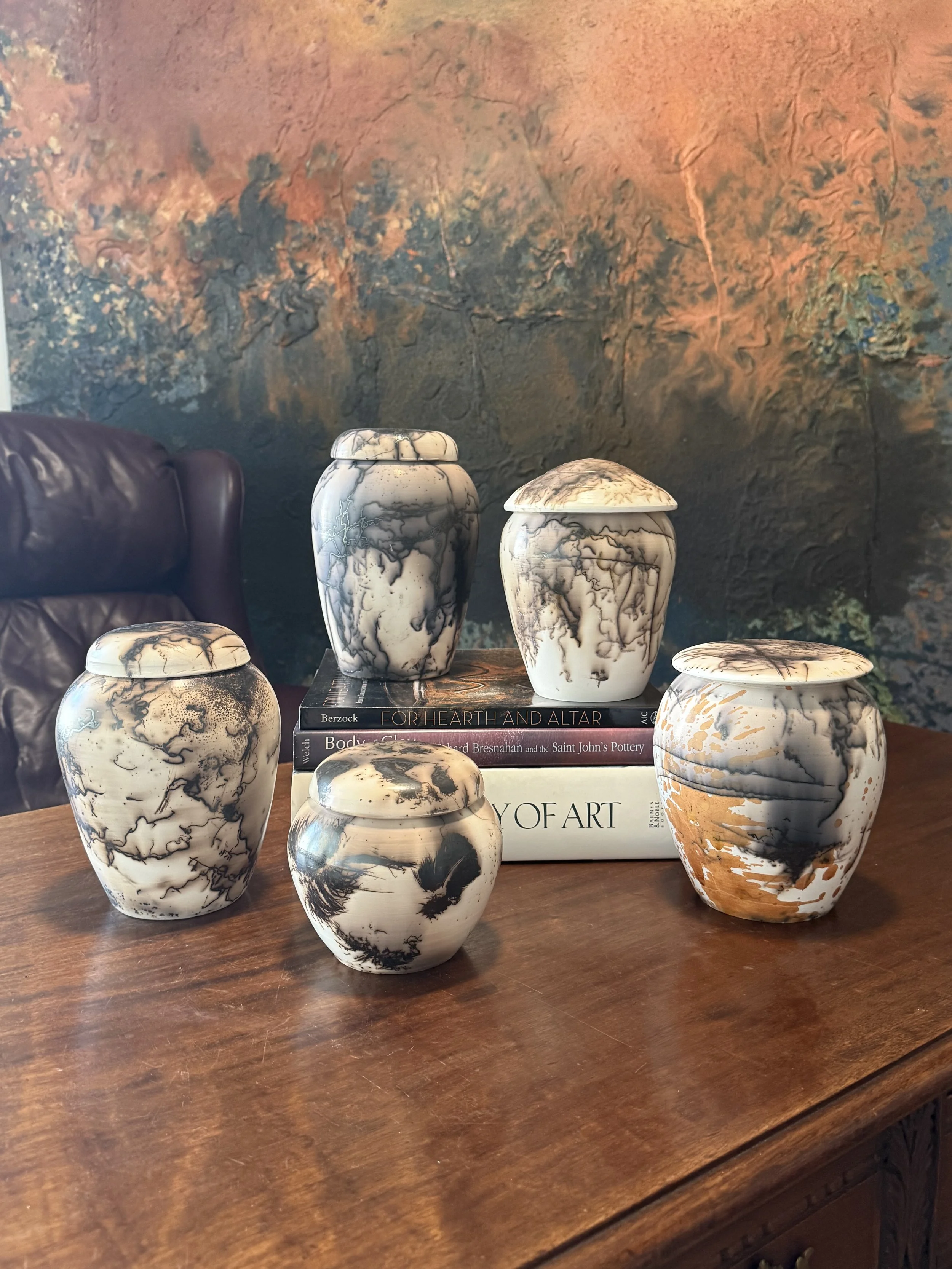
Instock vessels
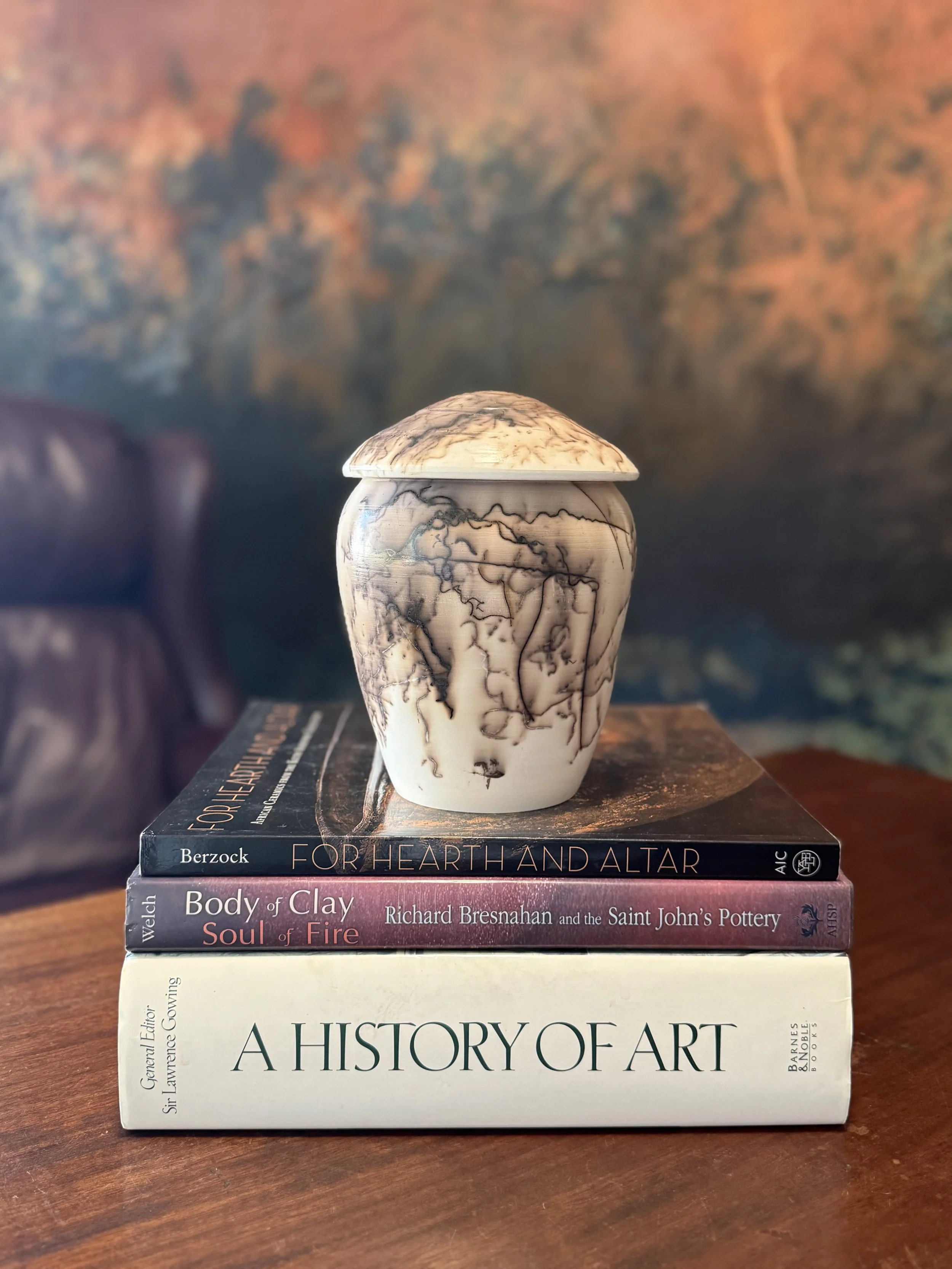
Ritual gives form to remembrance. It creates a way to gather, reflect, and honor what has been held in the heart—whether through quiet private moments or shared ceremony with family and friends.
A Horsehair Raku vessel or urn can become part of this practice. Each piece is created to hold presence, offering a grounded focal point for memory and meaning. When placed within ritual, it invites pause—an opportunity to speak names, share stories, offer flowers, light candles, or simply sit in reflection.
There is no single way to use these pieces. Some are held close in personal remembrance, others become the center of a celebration-of-life gathering, and some are integrated into ongoing seasonal or annual traditions of remembrance. Each approach is shaped by the people who gather and the life being honored.
Rooted in ancient commemorative traditions, ritual reminds us that memory is not only something we carry—it is something we can actively return to, again and again, with care and intention.
Dimensions: 7.5”H x 5.25”D
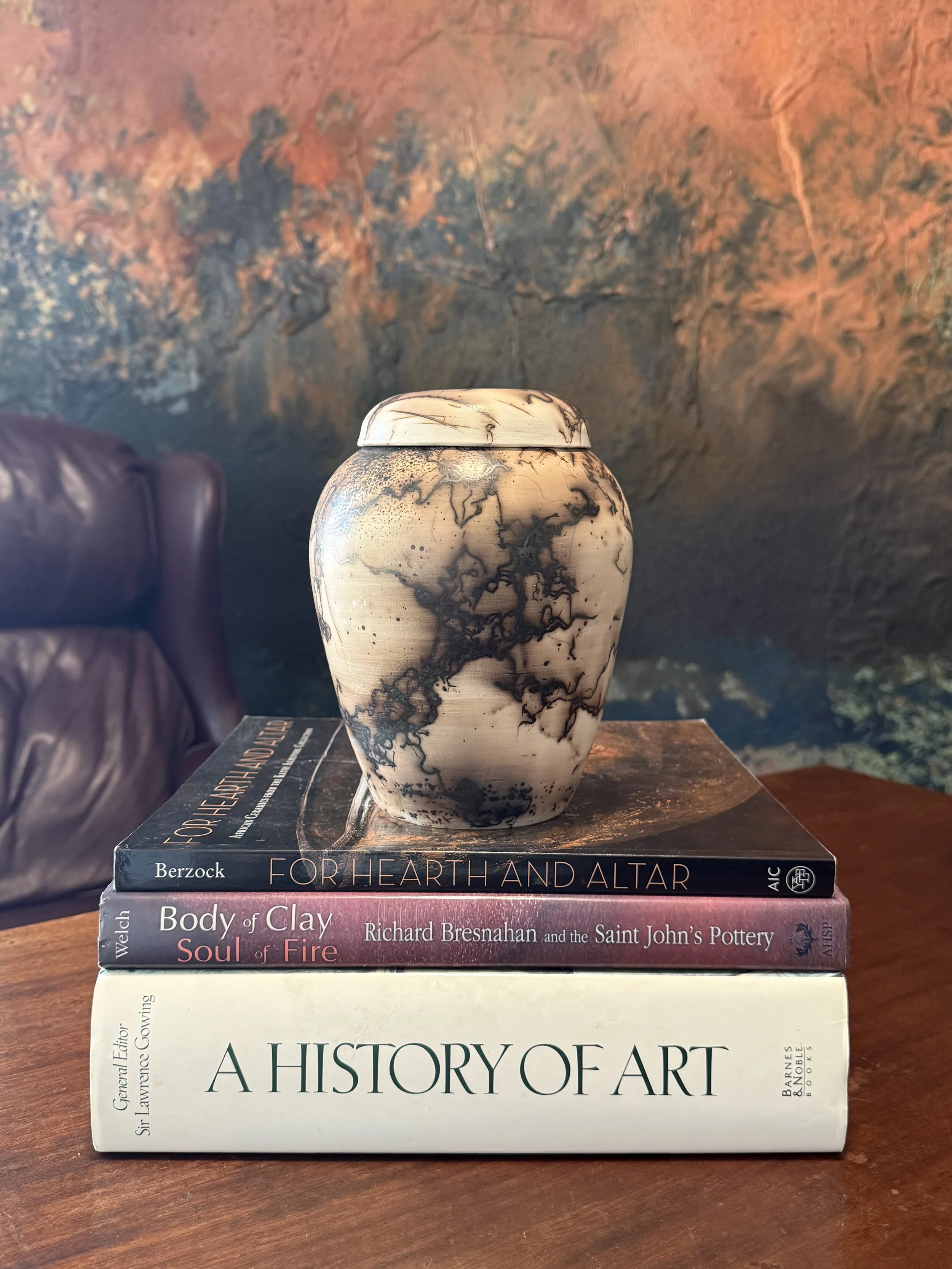
A legacy vessel is created as a lasting expression of love, memory, and continuity. It holds symbolic materials, and also the presence of a life that continues to be felt, remembered, and honored over time.
Each Horsehair Raku piece is individually handcrafted, shaped by hand and transformed through fire. Organic materials such as horsehair or a loved one’s hair, along with feathers, leaves, pine needles, blossoms, or sugar, leave permanent carbon markings on the surface—creating a one-of-a-kind record of fire, touch, and time.
A legacy vessel is an enduring presence. It may remain in a home, a sacred space, or a place of reflection, serving as a steady reminder of connection and belonging across seasons and years.
Rooted in ancient commemorative traditions, these vessels reflect the human desire to remember not only a life, but its lasting imprint. Simple, elemental, and deeply personal, a legacy urn offers a way for memory to continue living forward.
Dimensions: 7.25”H x 5.25”D
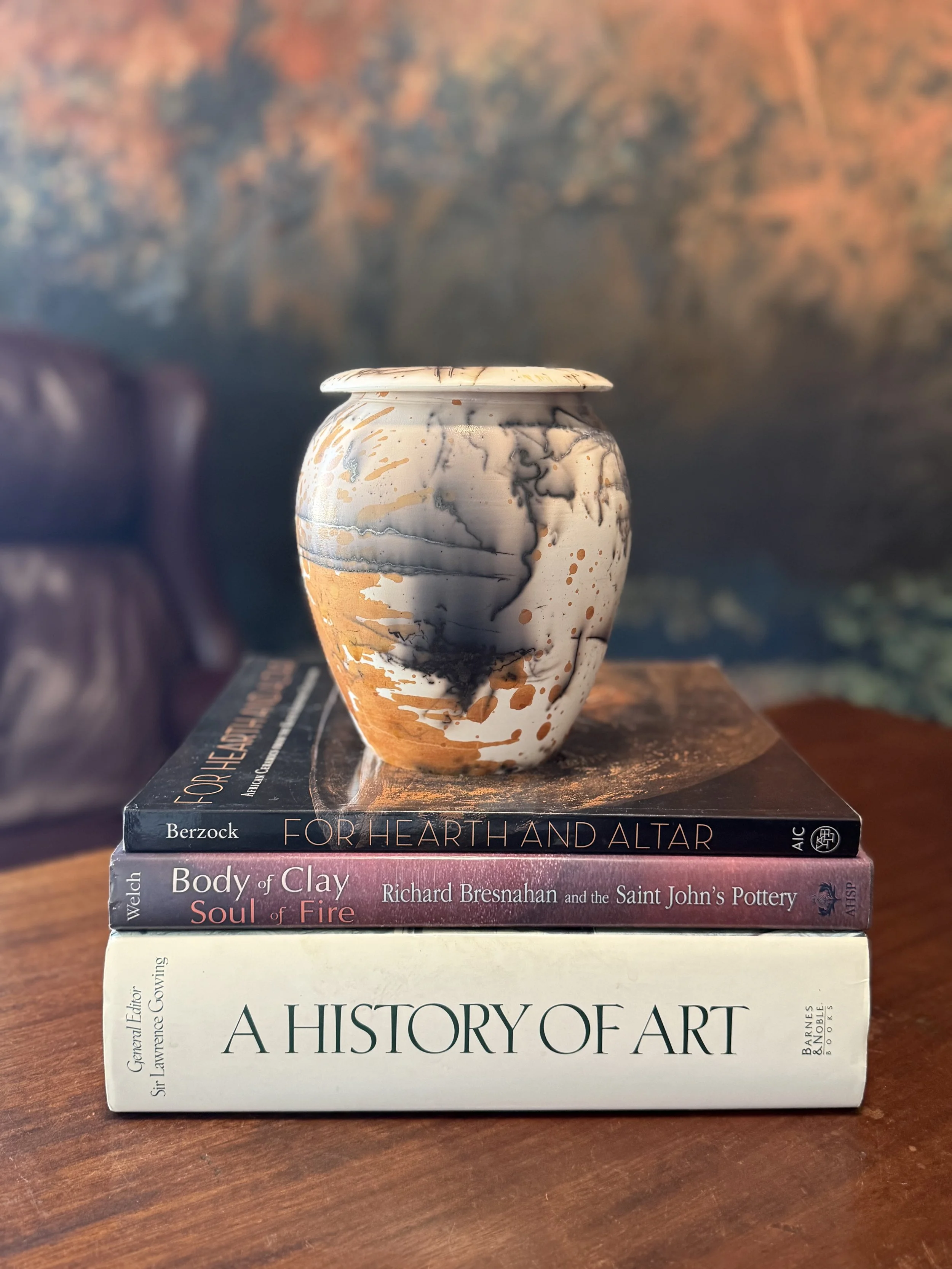
A celebration-of-life vessel is a focal point for remembrance, gathering, and shared storytelling. Each handcrafted piece offers a grounded, meaningful space where memory and love can be honored together.
Created in the Horsehair Raku tradition, every vessel is shaped by hand and transformed through fire. While still glowing from the kiln, organic materials such as horsehair or a loved one’s hair, along with feathers, leaves, pine needles, blossoms, or sugar, are placed on the surface. These elements leave natural carbon markings that cannot be repeated, making each piece entirely one-of-a-kind.
The resulting surface is raw and elemental, reflecting the beauty of impermanence and the uniqueness of each life remembered. At a gathering, the vessel becomes a quiet center for reflection, supporting ritual, conversation, and shared memory.
These vessels offer a simple, lasting way to honor presence, connection, and love.
Dimensions: 6.75”H x 5.5”D
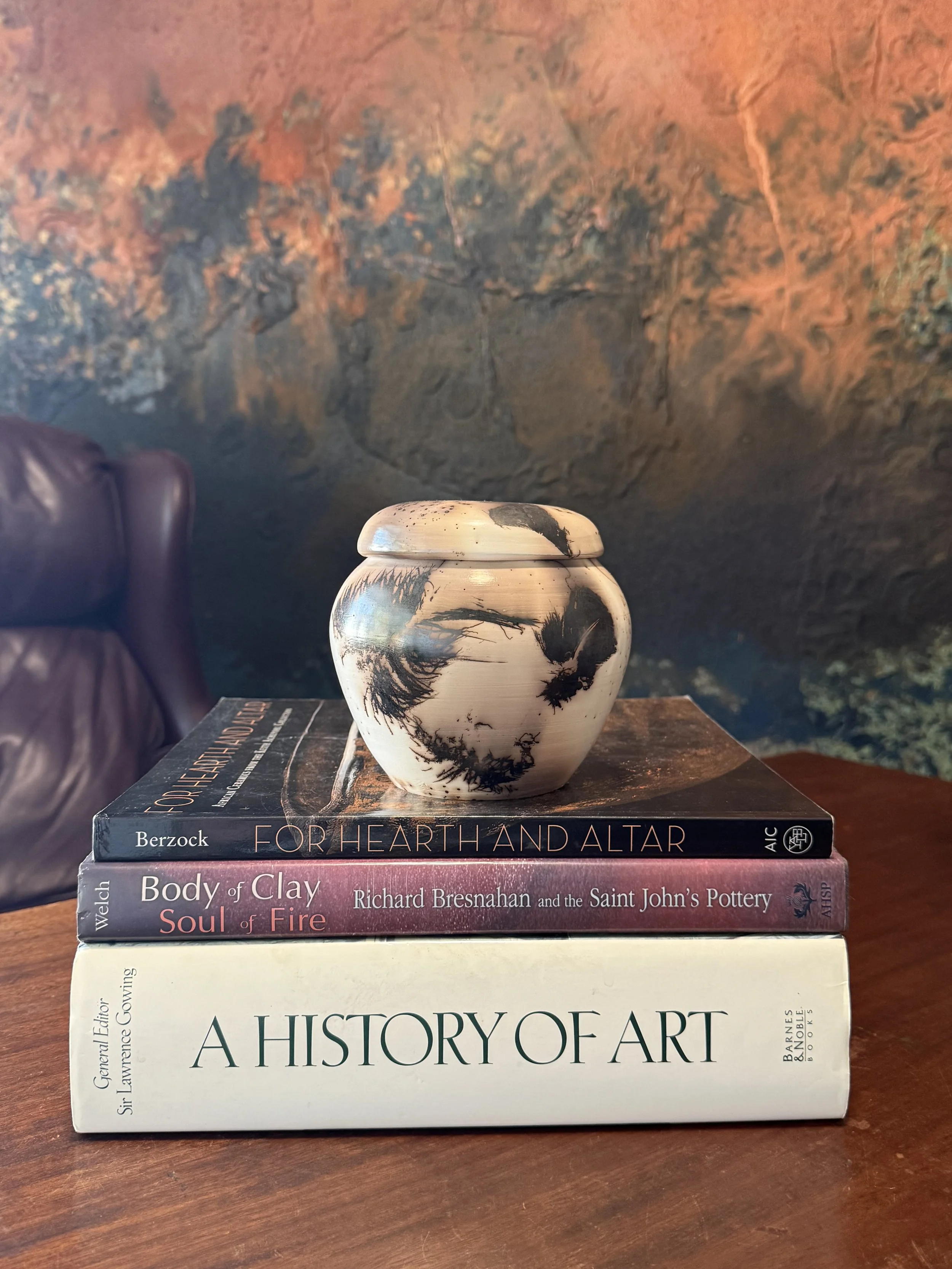
A keepsake urn is a handcrafted vessel for memory, connection, and remembrance. Each Horsehair Raku urn from Bending Pines Pottery is individually handcrafted to honor the bond shared with a beloved companion, human or animal, continuing a long tradition of commemorative art.
In the Horsehair Raku process, organic materials such as horsehair or a loved one’s hair, along with feathers, leaves, pine needles, blossoms, or sugar, are placed on the surface of the pottery while it is still glowing hot from the kiln. These natural elements create permanent carbon markings, ensuring every urn is entirely one-of-a-kind.
Created with simplicity and intention, each piece features an unglazed, softly burnished surface that keeps focus on memory rather than ornament. Some families choose to include hair from a loved one or animal, creating a deeply personal and tangible connection.
A keepsake vessel offers a lasting way to honor a life shared and remembered.
Dimensions: 4.75”H x 4.75”D
-
General Nationwide Cremation Facts
Cremation is legal in all 50 states.
A signed cremation authorization form is required everywhere.
Most states require approval from a coroner or medical examiner.
Embalming is usually not legally required before cremation.
Pacemakers and battery-powered implants must typically be removed prior to cremation.
Ashes can generally be kept at home, buried, or scattered legally in most states.
Important Note
Cremation laws can change and may also vary at the county or local level. Families should always confirm current requirements with a licensed funeral home, crematory, or state regulatory board before making arrangements.
-
Additional Considerations
Estimating ash volume is not an exact formula. Factors such as bone density, body height, and variations in the cremation process can all influence the final amount of cremated remains. Even so, the guideline is dependable in most situations. For peace of mind, it’s usually best to size up slightly — selecting an urn with an extra 10–20 cubic inches of capacity provides a safe buffer and helps prevent the disappointment of choosing one that is too small.
It’s also worth noting that two urns with similar exterior dimensions may have very different interior capacities. Thick materials, sloped interiors, ornate bases, and double-wall construction can all reduce the amount of usable space inside. For that reason, the urn’s stated capacity is far more important than its height, width, or overall weight.
Final Resting Place
When selecting an urn, consider where the ashes will be placed:
Burial: If the urn will be buried, ensure it fits the burial plot.
Display: For home display, choose a size that complements your space.
Sharing Ashes: If dividing ashes among family members, consider smaller keepsake urns.
-
Understanding Urn Sizes
Choosing the right urn size is crucial for properly holding the cremated remains of a loved one. The size of the urn should be based on the weight of the individual before cremation.
General Rule for Urn Size
Cubic Inches per Pound: The standard guideline is to allocate one cubic inch of urn capacity for each pound of body weight.
Example Calculation
Weight (lbs)Required Urn Size (cubic inches)100100150150200200
For instance, if a person weighed 150 pounds, you would need an urn that holds at least 150 cubic inches of ashes.